Do Probiotics Survive Stomach Acid? The Mouth-to-Gut Survival Decoder (With CFU Math)
How many of the CFUs on the label actually reach your gut? A stage-by-stage decoder of stomach acid survival, strain acid tolerance, and delivery formats.
Do Probiotics Survive Stomach Acid? The Mouth-to-Gut Survival Decoder (With CFU Math)
"Oral probiotics don't work because they are destroyed by stomach acid." That's the exact question someone posted to r/IsItBullshit, and honestly? I get why the doubt exists. You're swallowing live bacteria into a bag of acid designed to dissolve steak. It feels like throwing money into a meat grinder.
A similar thread on r/Microbiome asks it more carefully: "How true is that probiotics don't make it to the gut due to stomach acid?"
Here's the short, honest answer: some die, some survive. The real question isn't "do probiotics survive stomach acid" as a yes/no — it's how many, and that depends on three things you can actually control or at least check: the strain, the delivery format, and how you take it.
Your fasting stomach sits around pH 1–2 — genuinely brutal — while many common Lactobacillus and Bifidobacterium strains only tolerate around pH 3–4 in lab conditions (Koga 2022). That gap is the whole story. But it's a gap you can narrow.
In this post I'll walk your probiotic through the four gates between your mouth and your gut, show you which strains are naturally acid-resistant, and then do the CFU math — because "50 billion CFU" on the label is not what arrives in your intestines, and I think you should know roughly what does.
The Four Gates: Your Probiotic's Journey From Mouth to Gut
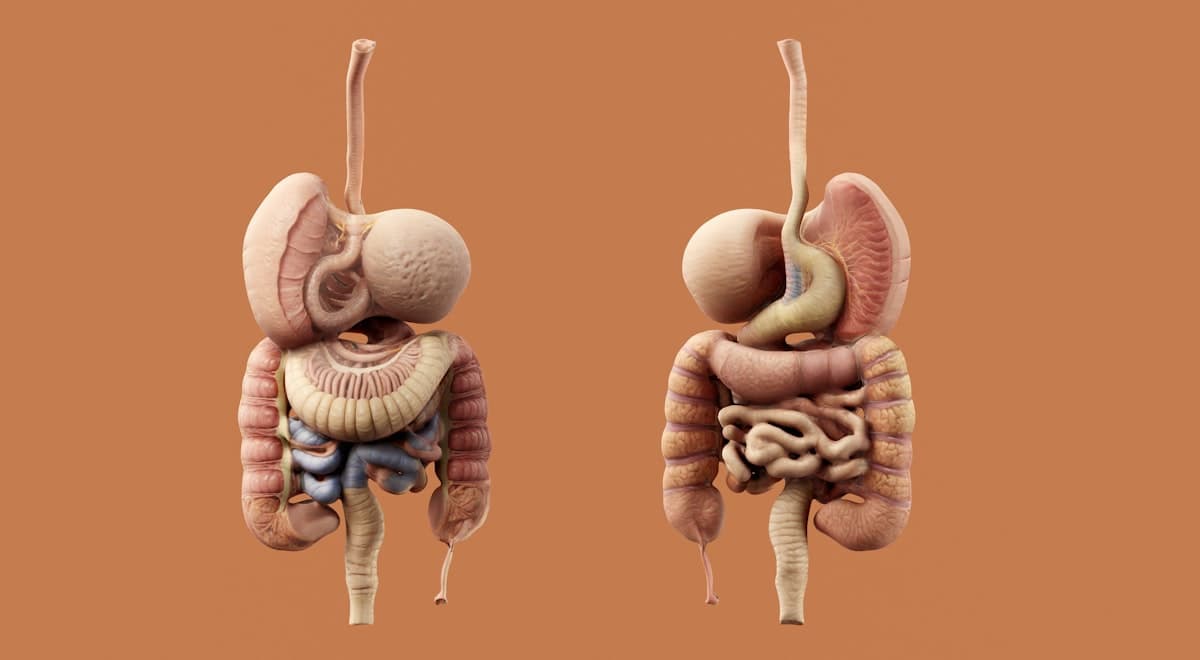
Think of the trip from mouth to colon as passing through four gates. Each one has a different pH, a different dwell time, and a different way of killing bacteria.
Gate 1 — The mouth and esophagus. Trivial, transit-wise. Seconds. Not a real threat unless you're chewing your capsule open (more on that later).
Gate 2 — The stomach. This is the big one. Fasting gastric fluid hits pH 1–2, and most bacteria simply cannot function there — in a healthy acidic stomach, live culturable bacteria number only around 10³ CFU/mL, with more than 99.9% of the bacteria in gastric fluid dead or non-culturable (Koga 2022). But — and this matters — your stomach doesn't hold everything at peak acidity. As one commenter in r/nutrition put it when someone asked how yogurt cultures survive: the stomach's acidity fluctuates, and food changes the equation. After a meal, gastric pH rises substantially before acid catches up. Your capsule doesn't sit in pH 1.5 for an hour; it sits through a curve.
Gate 3 — The duodenum and small intestine. pH jumps from ~2 up toward 6–7, which sounds like relief — except now bile salts and pancreatic enzymes attack the bacterial membrane instead. It's a different killer with the same job.
Gate 4 — The colon. The destination. If cells arrive here alive, they can ferment, produce metabolites, and interact with your immune system. Getting there is the whole game.
Here's the map in one table — this is the reference point for everything else in this post:
| Gate | Typical pH | Approx. dwell time | Main survival threat | Best passing strategy |
|---|---|---|---|---|
| 1. Mouth → esophagus | ~6.5–7.5 | seconds | minimal (salivary enzymes) | swallow intact, don't chew |
| 2. Stomach | 1–2 fasting; higher after food | 0.5–3+ hrs | gastric acid (HCl), pepsin | acid-tolerant strain, food buffering, or enteric coating |
| 3. Duodenum / small intestine | ~6–7 | 2–4 hrs | bile salts, pancreatic enzymes | bile-tolerant strains; delayed-release shells that open here |
| 4. Colon | ~5.5–7 | — | competition with resident microbiota | arrive alive, feed with prebiotic fiber |
One more nuance from the research: gastric survival isn't just about the strain's toughness. In simulated gastric juice at pH 2, L. rhamnosus GG survived dramatically better in the presence of metabolizable sugars like glucose — the sugar fuels glycolysis, which powers the F₀F₁-ATPase pump that pushes protons back out of the cell and keeps its internal pH livable (Corcoran et al. 2005). Translation: bacteria aren't passive victims of acid. The ones that can keep pumping survive. That mechanism is why food buffering works, and why strain selection matters so much.
Strain Matters: Which Probiotics Are Naturally Acid-Resistant
"Probiotics" is not one thing. It's a label covering dozens of species and hundreds of strains with wildly different acid tolerance — which is why arguing about "probiotics" in general is like arguing about whether "cars" are good off-road.
The Reddit crowd actually has this mostly right. In that r/IsItBullshit thread, the top responses point out that "many bacteria survive stomach acids just fine" and that L. acidophilus is literally named for its acid tolerance. Meanwhile the r/nutrition thread correctly flags the weak spot: "Bifidobacterium aren't very acid tolerant, and stomach acid kills more of that."
The research backs both claims up. Common Lactobacillus and Bifidobacterium strains survive only around pH 3–4 in screening, so strain-level selection is essential — some strains, like L. gasseri OLL2716, were specifically screened from thousands of candidates for acid resistance down to pH 2.5 (Koga 2022). And in a simulated upper-GI model, Lactobacillus strains survived transit better than Bifidobacterium strains in the same delayed-release capsule (Govaert et al. 2024).
Here's the comparison, with an honest "strength of evidence" column — because I want you to know when you're looking at human data versus lab-dish estimates:
| Strain (group) | Relative acid tolerance | Example strains | Strength of evidence | Notes |
|---|---|---|---|---|
| Lactobacillus spp. | Moderate–high | L. rhamnosus GG, L. gasseri OLL2716 | In vitro + human detection studies | OLL2716 screened from ~2,000 strains, survives pH 2.5, detected in human gastric mucus after yogurt dosing |
| Bifidobacterium spp. | Lower | B. longum, B. bifidum | In vitro (SHIME, TIM-1 models) | Hit hardest by gastric transit; benefit most from protective formats |
| Saccharomyces boulardii (yeast) | High | — | In vitro + human RCTs for specific outcomes | Yeast cell wall handles gastric transit well; widely reported to survive stomach acid |
| Bacillus spp. (spore-formers) | High | B. subtilis, B. coagulans | In vitro + some human RCTs | Spores are structurally built to survive acid, heat, and drying |
Two honesty notes. First, those survival figures are mostly in vitro estimates — simulated gastric juice, SHIME reactors, TIM-1 machines. They're the best tool we have for comparing formats, but a lab reactor is not your stomach on a Tuesday. Second, tolerance varies within a species by strain, so "L. rhamnosus" on a label tells you less than "L. rhamnosus GG."
The CFU Math: Label CFU × Survival Rate = What Actually Arrives
This is where I want to slow down, because it's the part nobody puts on the label.
Your bottle says 50 billion CFU. That's the count at manufacture (or at expiration, if the brand is honest). Then the survivors run the four gates. What's left when they reach your intestines?
The research gives us honest ranges rather than one number. In an in vitro digestion model, standard capsules, powders, and liquids delivered under 1% culturability through simulated stomach and small intestine — while a delayed-release capsule delivered over 50% (Govaert et al. 2024). In another dynamic in-vitro model, unformulated powder lost almost everything — full GI transit survival of roughly 2% for bifidobacteria and 0.1% for lactobacilli — while enteric-coated tablets flipped the math entirely (Venema et al. 2019).
So here's the CFU math, using a 50-billion-CFU label. Treat these as rough estimated ranges, not precision numbers — actual survival swings with strain, stomach-fullness, coating quality, and individual gastric physiology:
| Label CFU | Format / strain situation | Assumed survival (estimate) | Estimated arrival CFU | Basis |
|---|---|---|---|---|
| 50 B | Standard capsule, mixed strains | ~0.1–5% | 50 M – 2.5 B | In vitro SHIME: <1% culturability for standard formats |
| 50 B | Standard capsule, acid-tolerant Lactobacillus | ~5–20% | 2.5 B – 10 B | Lactobacilli outsurvive bifidobacteria in same format |
| 50 B | Delayed-release capsule | ~50%+ | ~25 B | SHIME: 51.7–56.0% survival through upper GI |
| 50 B | Enteric-coated tablet | ~50–70% gastric delivery | 25 B – 35 B | TIM-1: 20–40× more viable cells vs uncoated powder |
| 50 B | With food / in yogurt matrix | improved vs fasted | (shifts ranges upward) | Food buffers gastric acid; yogurt acts as protective matrix |
Read that middle row again. Same label number, same bugs, but the format can mean the difference between roughly 50 million cells arriving versus 25 billion. That's a ~500× swing from delivery format alone.
It also explains why brands stack absurd CFU counts. If your worst case kills 95% of cells, and the product loses potency during months on a shelf, then over-labeling CFU is how a manufacturer guarantees something alive still arrives at end of shelf life. The big number is partly a survival buffer, not just marketing. (If you want to go deeper on reading labels — potency claims, strain designations, expiration dating — I broke that down in Greek yogurt vs regular yogurt for gut health, where the CFU question comes up from the food side.)
How to Stack the Odds: Delivery Formats That Boost Survival
You can't rewrite your stomach acid. But you can change the conditions your probiotic meets on the way down. Three levers, ranked by how well-supported they are:
1. Food buffering. Taking probiotics with or in food raises gastric pH during transit and gives bacteria metabolizable sugars — the exact fuel-and-pump mechanism Corcoran's team identified (Corcoran et al. 2005). Dairy is the classic vehicle: Michigan State University Extension addresses the survival question directly, noting that yogurt cultures do survive stomach acids and can be recovered from the intestines — the food matrix itself is protective (MSU Extension). Fermented dairy is the delivery format with the longest track record of human use, which is one reason I looked at kefir vs yogurt for IBS and bloating separately — if you're going the food route, they're not equivalent.
2. Enteric or delayed-release formats. These are shells designed to stay closed in acid and dissolve in the higher pH of the small intestine. The evidence above — >50% survival for delayed-release capsules, 20–40× more viable cells from enteric coating — is in vitro, but it's consistent across two independent models and it's mechanistically sensible (Govaert et al. 2024; Venema et al. 2019). If your probiotic is bifidobacteria-heavy, this is the lever that matters most, since those strains are the most acid-fragile.
3. Naturally tough organisms. Spore-formers (Bacillus subtilis, B. coagulans) and the yeast Saccharomyces boulardii survive gastric transit structurally — spores and yeast walls are built for hostile environments. If you're someone whose stomach drops to truly brutal pH, these are the formats least likely to end up as expensive dead powder.
With food or empty stomach?
From a pure survival standpoint: food wins. An empty morning stomach is at peak acidity, pH 1–2 (Koga 2022); food buffers that spike and supplies the sugars that fuel acid tolerance. The only real exception is delayed-release formats designed to time their opening regardless of meal state — follow the label on those.
One quick practical note from r/GutHealth: people ask whether opening a capsule into yogurt or applesauce works. It can, but you're trading away the capsule's brief protective head start and exposing the cells to stomach acid immediately. If the product is enteric-coated, never open it — the coating is the product. If it's a plain capsule and you can't swallow pills, mixing into cool (not hot) food right before eating is a reasonable compromise.
"But They Don't Colonize Anyway" — The Honest Caveat
I want to deal with the smartest version of the skeptic's argument, because it's out there — r/Microbiome has a whole thread titled "Probiotics don't colonise, so what's the point?"
Here's the thing: the skeptics are right about the first half. Most probiotic strains do not permanently colonize your gut. They pass through over days to weeks. If your mental model is "repopulate my microbiome like planting a garden," that model is wrong, and the industry has done nobody any favors by implying otherwise.
But "doesn't colonize" is not the same as "does nothing." While they transit, live probiotic cells ferment fibers into short-chain metabolites, interact with gut-associated immune tissue, and can crowd out less helpful interactions in the meantime — these are transient metabolic and immune effects, and they've been measured in human trials. In the SHIME follow-up experiments, the surviving probiotic population measurably shifted colonic fermentation — boosting short-chain fatty acid production including butyrate, and increasing beneficial genera like Roseburia and Faecalibacterium (Govaert et al. 2024). Clinically, probiotics have shown human RCT benefits in specific contexts — for example, L. gasseri OLL2716 (LG21) improved functional dyspepsia symptoms in a randomized controlled trial (Koga 2022).
So the honest framing is: a probiotic is less like a tenant and more like a traveling worker. It doesn't move in. It does a job while passing through — and that job still requires it to arrive alive, which loops us right back to stomach acid survival.
The Survival Decoder, Summarized
Let's compress the whole thing:
- The question isn't yes/no. "Do probiotics survive stomach acid" has a range answer: roughly under 1% to over 50% depending on strain and format, per in vitro models.
- Strain matters. Lactobacillus generally outsurvives Bifidobacterium; spore-formers and S. boulardii shrug off acid almost entirely.
- Format may matter more than CFU. Delayed-release and enteric-coated formats delivered 20–40×+ more viable cells than unprotected ones in simulated digestion.
- Food is your friend. A fed stomach is a less acidic, sugar-supplying stomach — both help bacteria survive.
- Survival ≠ colonization — and that's okay. Transient metabolic effects are the actual mechanism, and they're real.
Your practical checklist:
- Check the strains — named strains (e.g., L. rhamnosus GG) beat "proprietary blend."
- Check the format — if it's bifidobacteria-heavy, prioritize delayed-release or enteric coating.
- Take with food unless the label says otherwise.
- Store it properly — heat kills what stomach acid didn't; follow the refrigeration instructions.
And two follow-ups worth your time: if enough cells do survive, what happens next follows a fairly predictable arc — I mapped that out in how long probiotics take to work: the week-by-week timeline, because the survival question only matters once the timeline starts. Or, if you'd rather skip the stomach-acid gauntlet entirely, prebiotics feed the bacteria already living in your gut — no survival problem to solve — which I cover in probiotics vs prebiotics.
References
- Corcoran BM, Stanton C, Fitzgerald G, Ross RP. "Survival of Probiotic Lactobacilli in Acidic Environments Is Enhanced in the Presence of Metabolizable Sugars." Applied and Environmental Microbiology, 2005. https://pmc.ncbi.nlm.nih.gov/articles/PMC1151822/
- Koga Y. "Microbiota in the stomach and application of probiotics to gastroduodenal diseases." World Journal of Gastroenterology, 2022. https://pmc.ncbi.nlm.nih.gov/articles/PMC9813937/
- Govaert M, et al. "Survival of Probiotic Bacterial Cells in the Upper Gastrointestinal Tract and the Effect of the Surviving Population on the Colonic Microbial Community Activity and Composition." Nutrients, 2024. https://pmc.ncbi.nlm.nih.gov/articles/PMC11357584/
- Venema K, Verhoeven J, Verbruggen S, Espinosa L, Courau S. "Probiotic survival during a multi-layered tablet development as tested in a dynamic, computer-controlled in vitro model of the stomach and small intestine (TIM-1)." Letters in Applied Microbiology, 2019. https://pmc.ncbi.nlm.nih.gov/articles/PMC6856813/
- Michigan State University Extension. "When ingesting 'probiotics' (i.e. live culture yogurt), does anything 'live' survive stomach acids to populate small or large intestine?" https://www.canr.msu.edu/news/when-ingesting-probiotics-i-e-live-culture-yogurt-does-anything-live-survive-stomach-acids-to-populate-small-or-large-intestine
Can You Take NMN and Resveratrol Together? The Stack, Decoded by Evidence Strength
Next →How Much Does It Cost to Run a Dehumidifier? Real Math (Watts × Hours × Your Rate)
Related Posts
Probiotics vs Prebiotics: What's the Difference and Which One Do You Actually Need? (2026)
How Long Do Probiotics Take to Work? A Realistic Week-by-Week Timeline