How Often Should You Clean Your Humidifier? A Real Schedule (Not Vague Advice)
How often should you clean your humidifier? EPA rules in one schedule: daily rinse, every-third-day tank wash, weekly vinegar descale, plus the pink slime fix.
How Often Should You Clean Your Humidifier? A Real Schedule (Not Vague Advice)
You lift the tank lid to top off the water and there it is — a slick pink film creeping across the bottom. Not a speck. A film. If you're like most people, your first thought is defensive: "But I change the water every day."
Here's the uncomfortable part. Refilling is not cleaning. Pouring fresh water into a tank rinses almost nothing, because the problem isn't the water you put in — it's the biofilm and mineral scale stuck to the surfaces the water touches. A few weeks of "I just refill it" is exactly how that pink slime earned its lease.
So, how often should you clean your humidifier? Not "occasionally." Not "when it looks dirty." The EPA gives a concrete number — every third day for the tank — and manufacturers layer weekly and monthly jobs on top of that. This post turns those rules into one schedule you can actually follow, then shows you how to adjust it for your water hardness, your run time, and your machine type.
(If you're still deciding whether a humidifier belongs in your home at all, our air purifier vs. humidifier comparison covers the basics first.)
The Short Answer: Your Humidifier Cleaning Schedule at a Glance
Here's the whole schedule in one table. Everything after this section explains why each row exists.
| Task | How often | Method (summary) | Time | Based on |
|---|---|---|---|---|
| Empty, rinse, wipe dry | Daily | Dump remaining water, rinse tank, wipe surfaces dry, refill | 1–2 min | EPA daily-empty guidance [1] |
| Full tank clean | Every 3 days | Wash tank and base with brush + water (vinegar for scale), disinfect per manual, rinse and dry | 10–15 min | EPA "clean every third day" [1] |
| Vinegar descale | Weekly | Half-tank water + white vinegar, soak 15–20 min, shake, rinse, dry | 20–30 min (mostly waiting) | Levoit / Honeywell cleaning guides [4][5] |
| Deep clean + filter check | Monthly | Full disassembly, vinegar soak of all wettable parts, inspect wick/membrane | 30–45 min | Common practice — confirm in your manual |
| End-of-season storage | Once per season | Deep clean, dry 24+ hours, store with lid off | 45 min + drying day | Standard off-season practice |
The EPA's own wording is blunt: "Clean portable humidifiers every third day." And daily, you should "empty the tank, wipe all surfaces dry, and refill" [1]. That's the floor, not a stretch goal.
Two things people get wrong about this table:
- The daily rinse is the highest-leverage row. Sixty seconds of dumping and drying does more than a monthly deep clean, because most microbes and slime need standing water to get established.
- The 3-day clean is not optional if you run it nightly. If your humidifier only comes out during a bad cold, the calendar resets each time — but during heating season, treat every third day as fixed.
Why "I Just Refill the Water" Isn't Cleaning

Water that sits in a tank — even for one day — is a growth medium. Whatever microbes are in your tap water, in the air, or left over from yesterday's film settle in and multiply in a warm, dark, still container. Rinsing displaces the loose ones. It does nothing to the film anchored to the walls.
The second thing refilling ignores is mineral scale. Hard water deposits calcium and magnesium on every surface the mist passes through. In an ultrasonic humidifier, that same mineral load gets nebulized into the air as white dust — the "distilled water humidifier mineral dust" problem you've probably seen mentioned. The EPA's fix is to use water with low mineral content, ideally bottled water labeled "distilled," which removes minerals far better than spring or mineral water [1].
And the exposure route is real, though there's no need for alarm: EPA notes that breathing mist containing tank pollutants "has been implicated as causing a certain type of inflammation of the lungs," and that children, the elderly, and people with lung conditions may be more susceptible [1]. The point isn't that humidifiers are dangerous. The point is that whatever grows in your tank doesn't stay in your tank — the machine aerosolizes it and delivers it straight to the room.
Beyond cleaning, EPA keeps the operating advice simple: run the humidifier only as directed, and don't leave water sitting in it [1]. That's it. No magic product, just frequency.
What That Pink Slime Actually Is (Serratia Marcescens)
That pink film has a name, and it's not mold.
It's Serratia marcescens, a bacterium. That distinction matters more than it sounds like it would. Mold sits on surfaces and responds to surface treatment. S. marcescens builds a biofilm — a structured community wrapped in a protective matrix — and it feeds on fatty, phosphate-rich residue. In bathrooms, that means soap scum. In a humidifier, it means detergent residue, skin oils from handling, and the lipid layer old water leaves behind. The organism is a well-documented environmental bacterium and opportunistic pathogen, known to form biofilms on moist surfaces, persist in wet environments, and resist common disinfectants [2][3].
This is why the r/CleaningTips threads are full of the same frustrated loop: someone wipes the pink off, and it's back within days. One representative thread — "Pink mold in humidifier" — collects the usual DIY fixes (rock salt and cleaner, shaking, vinegar soaks) [6]. Another identifies the film as Serratia and pushes for proper disinfection [7]. The recurrence isn't bad luck. Wiping removes the visible layer while leaving the biofilm matrix and its food supply intact. You removed the symptom and kept the habitat.
To actually clear it:
- Vinegar soak first. Fill the tank partway with a 50/50 water and white vinegar mix and let it sit 20–30 minutes. Vinegar disrupts the film and dissolves mineral scale at the same time.
- Scrub with a dedicated brush — a bottle brush gets under the handle collar where film hides. Don't use the dish sponge you use on plates.
- Rinse until the vinegar smell is gone, then dry fully before refilling.
- Bleach only if your manual says so. Some manufacturers permit a dilute bleach rinse for stubborn contamination; others explicitly advise against it because it degrades seals and wicks. Check your model's instructions before reaching for it.
Then break the food chain: skip dish soap inside the tank (residue becomes feed), dump water daily, and let everything dry between runs. A tank that dries out daily is a tank Serratia can't hold onto.
The Weekly Descale: Vinegar, Step by Step
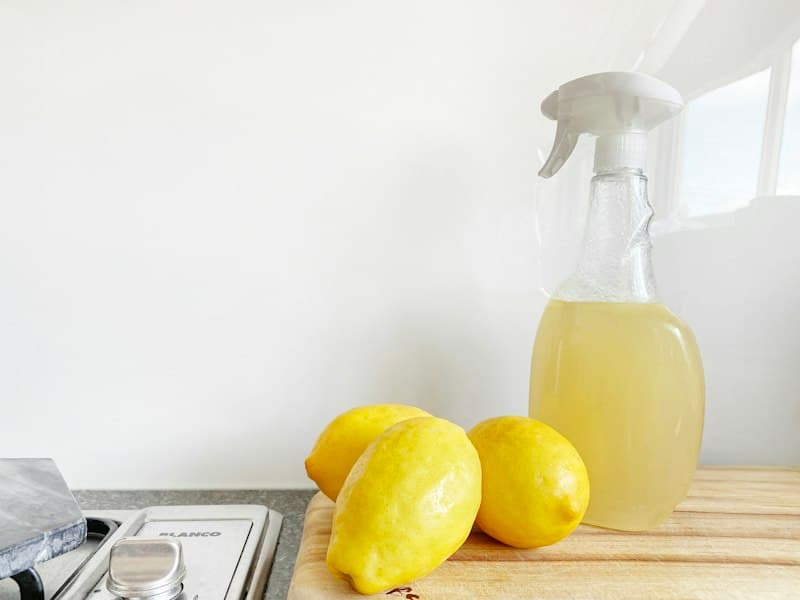
Mineral scale and biofilm are two different problems, and the weekly descale targets the first one. Here's the routine, assembled from manufacturer cleaning guides (Levoit specifies a 15–20 minute vinegar soak; Honeywell recommends vinegar for scale removal in its steam-type units) [4][5]:
- Unplug first. Always. Water and energized bases don't mix.
- Disassemble the tank, cap, and any removable base parts.
- Fill the tank about halfway with white vinegar (full-strength for heavy scale, 50/50 with water for maintenance). Some manufacturers suggest topping with water after a few minutes so the solution reaches the tank shoulders.
- Wait 15–20 minutes — longer soaks, up to an hour, are fine for visible scale. Gently shake midway.
- Empty, then scrub the neck, threads, and crevices with a soft brush.
- For ultrasonic units: treat the nebulizer plate gently. Wipe it with a soft cloth or the manufacturer's brush. Scratching the diaphragm degrades mist output permanently.
- Rinse thoroughly — twice is not paranoid. Any vinegar left behind will smell like a salad when the mist kicks on.
- Air-dry everything before reassembling.
One more habit worth stealing: don't wash the tank with dish soap. It's tempting, but soap residue clings to the plastic walls and — as covered above — becomes food for exactly the bacterium you're trying to starve. Vinegar, water, and a brush are the whole toolkit.
Adjust the Schedule for Your Water and Your Machine
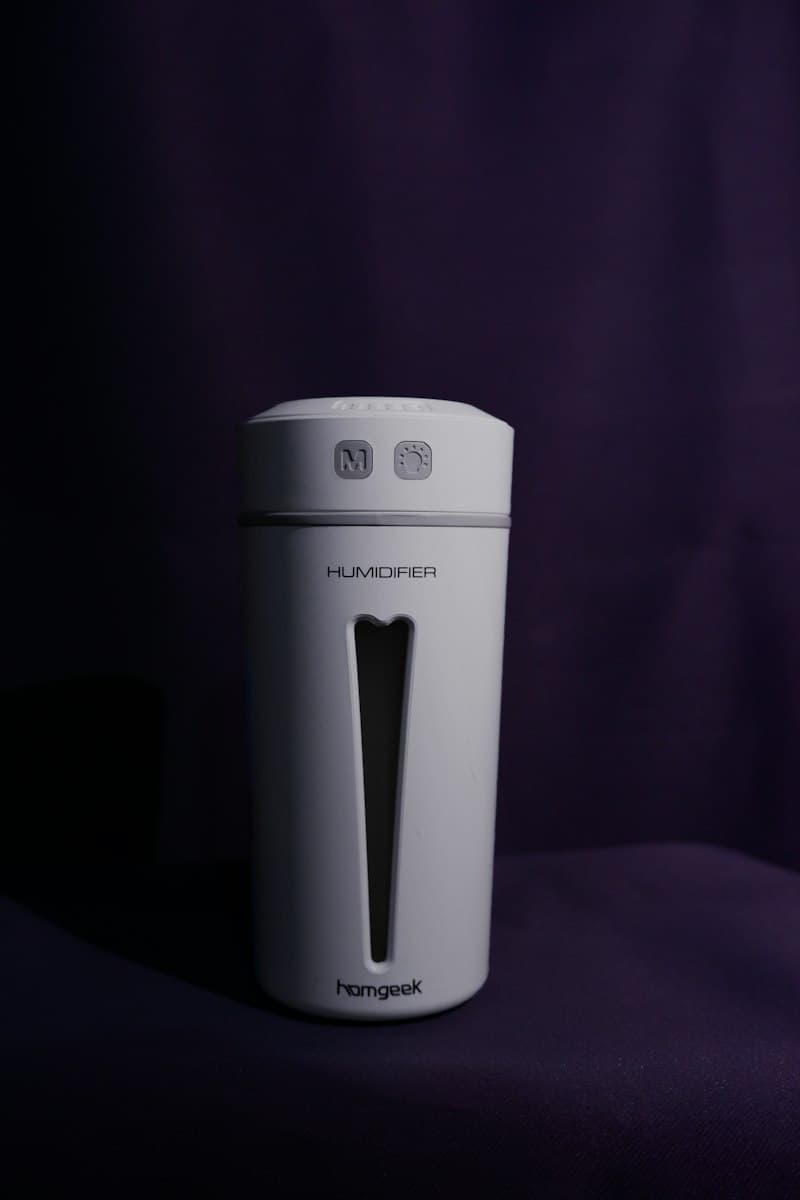
The base schedule assumes average water and nightly use. Yours probably differs. This matrix is where you personalize it:
| Your situation | Descale frequency | Deep clean frequency | Filter / wick check | Notes |
|---|---|---|---|---|
| Hard water + ultrasonic + running 24/7 | 2x per week | Monthly | Monthly (watch for white dust) | Strong candidate for distilled water — ultrasonic units broadcast minerals as dust [1] |
| Hard water + ultrasonic + bedtime only | Weekly | Monthly | Monthly | Same mineral load, fewer hours; watch for a scale ring at the waterline |
| Soft water + any unit + bedtime only | Every 1–2 weeks | Every 4–6 weeks | Every 4–6 weeks | Scale builds slowly; biofilm becomes the main enemy — keep the daily dump |
| Evaporative (wick) unit, any water | Weekly (base) | Monthly | Wick: replace, don't clean — typically every 1–2 months | Wicks can't be effectively cleaned; saturated wicks grow odor fast. Follow your model's replacement interval |
| Warm mist / steam unit | Every 1–2 weeks | Monthly | Check heating element for scale | Boiling kills microbes, but scale still coats the wetted parts; vinegar removes it per Honeywell guidance [5] |
Three adjustments that move the needle most:
- Hard water is the single biggest accelerator. If your kettle furs up in a month, your humidifier tank will too. Either descale twice a week or switch to distilled water — which EPA recommends anyway to cut mineral dispersal [1].
- Run time matters more than tank size. A unit running around the clock processes far more water (and leaves far more residue) than one running eight hours.
- Evaporative owners: your "filter problem" is a replacement problem. Humidifier filter replacement frequency isn't about cleaning — wicks are consumables. Once a wick smells musty or goes rigid with scale, cleaning won't bring it back.
End-of-Season Storage (The Step Everyone Skips)
Spring arrives, the humidifier goes quiet, and — this is the classic move — it goes into the closet with water still sloshing inside. That tank full of leftover water is the number-one reason next November opens with a pink surprise.
The shutdown routine takes under an hour, most of it passive:
- Deep clean everything — full vinegar soak of the tank, base, and any small parts, per the weekly routine.
- Disassemble completely, including gaskets and caps.
- Dry for at least 24 hours in a ventilated spot, surfaces wiped and parts laid out — not stacked.
- Store with the tank cap off so any remaining moisture can escape. A sealed, slightly damp tank is an incubator.
- Keep the filter (if any) out of the unit, or replace it fresh next season.
If you're switching from winter humidifying to summer dehumidifying — same room, opposite problem — it's worth knowing what that second machine costs to run before the season starts; we broke down the real monthly running cost of a dehumidifier here.
The Takeaway
The whole schedule, compressed:
- Every day: dump, rinse, wipe dry. Sixty seconds.
- Every third day: proper tank wash — EPA's explicit interval [1].
- Weekly: vinegar descale; monthly deep clean; hard-water or 24/7 runners move up a notch.
- At season's end: vinegar, full dry, store open.
And the honest framing: if you can already see pink slime, you're a full cycle behind, not in a disaster. Clean it properly — vinegar soak, brush, dry — and start the schedule from today. The film came back before because the routine never changed, not because the bacterium is invincible.
What's your setup — hard or soft water, ultrasonic or evaporative, nightly or all-day? Drop it in the comments and I'll tell you which row of the matrix you belong in. And if your moisture problem runs the other direction in summer, our guide to a dehumidifier vs. clothes dryer for indoor drying is the companion read.
References
- U.S. Environmental Protection Agency — Use and Care of Home Humidifiers (Indoor Air Quality): https://www.epa.gov/indoor-air-quality-iaq/use-and-care-home-humidifiers
- PMC — Serratia marcescens: A Versatile Opportunistic Pathogen (review): https://pmc.ncbi.nlm.nih.gov/articles/PMC12691863
- CDC, Emerging Infectious Diseases — outbreak report on invasive Serratia marcescens linked to contaminated environmental sources: https://wwwnc.cdc.gov/eid/article/30/13/23-0801_article
- Levoit — How to Clean Your Humidifier and More Best Practices (official): https://levoit.com/blogs/levoit-blog/4-best-humidifier-practices-clean-your-humidifier
- Honeywell Home — TrueSteam / Steam Branded Humidifier Maintenance (official support): https://www.honeywellhome.com/blogs/support/truesteam-or-steam-branded-humidfier-maintenance
- Reddit r/CleaningTips — Pink mold in humidifier (community context): https://www.reddit.com/r/CleaningTips/comments/lgjcji/pink_mold_in_humidifier
- Reddit r/CleaningTips — What's causing this pink/yellow stuff in my humidifier? (community context): https://www.reddit.com/r/CleaningTips/comments/1uz73b3/whats_causing_this_in_my_humidifier_it_was