Magnesium Glycinate Kept Me Up All Night — Why the Sleep Supplement Backfires for Some People
Magnesium glycinate is supposed to help you sleep — so why is it keeping you awake? The paradoxical glycine/NMDA reaction, who gets it (Reddit patterns), and which form to switch to.
Magnesium Glycinate Kept Me Up All Night — Why the Sleep Supplement Backfires for Some People
Here's the story I keep seeing, in my own life and then repeated on every sleep forum I dug into: you finally buy the magnesium glycinate. The internet told you it was the "calming" one, the one people swear by for sleep. You take it 30 minutes before bed, expect to melt into the pillow, and instead… your eyes snap open. 1 AM. 2 AM. 3:14 AM, staring at the ceiling, mind running laps, heart a little quick. The supplement that was supposed to knock you out kept you up all night.
The first reaction is always the same: that can't be right. Magnesium is supposed to calm you down. It blocks the excitatory NMDA receptor and dampens neural excitability — that's a core reason it gets recommended for sleep (Kirkland et al., Nutrients, 2018, PMC6024559; He et al., Nature and Science of Sleep, 2025, PMC12535714). So when the opposite happens, you assume it's the brand, the dose, something you ate, anything but the glycinate itself.
But you're not imagining it, and you're not alone. Scrolling through r/sleep, r/Supplements, r/Menopause, and r/adhdwomen, the same complaint shows up in hundreds of threads: "magnesium glycinate gave me insomnia," "kept me up all night," "worsened my sleep instead of helping." This isn't a fluke or a bad batch. It's a real, documented type of reaction — small in absolute numbers, but loud when it hits you.
This piece walks through what's actually going on: why the "sleep" form of magnesium can backfire for some people, who tends to get this reaction (the patterns are surprisingly consistent), and what to do about it — including whether to stop cold or switch to a different magnesium form.
"I Took Magnesium Glycinate for Sleep — and Was Up All Night"
Magnesium glycinate (also sold as magnesium bisglycinate) gets pushed as the sleep form for a good reason. The magnesium is bound to glycine, a small amino acid that's genuinely been shown to improve subjective sleep quality and shorten the time it takes to fall asleep, apparently by lowering core body temperature (Bannai & Kawai, Journal of Pharmacological Sciences, 2012, PMID 22293292; Yamadera et al., Sleep and Biological Rhythms, 2007). Combine that with magnesium's own calming effect on neural excitability, and glycinate is a reasonable first choice for most people.
The problem is "most people." A subset of users get the exact opposite effect — the lights go on instead of off. And because everyone around them is raving about how glycinate changed their sleep, the people who react badly tend to assume they're the broken one, not the supplement.
If that's you, stop troubleshooting your pillow and read on. The first thing worth knowing is that this reaction has a name.
You're Not Imagining It — This Is a Real "Paradoxical Reaction"
In pharmacology, a paradoxical reaction is when a substance produces the opposite of its expected effect — a sedative makes you agitated, a relaxant makes you tense. It's a known, if uncommon, phenomenon across many drug classes. The classic example is benzodiazepines: a literature review found that these GABA-enhancing sedatives trigger paradoxical agitation, excitement, or aggression in a small but real fraction of people — under 1% in general population studies, higher in groups with certain risk factors like alcohol abuse or pre-existing psychiatric conditions (Mancuso et al., Pharmacotherapy, 2004, PMID 15460178; Saïas & Gallarda, L'Encéphale, 2008, PMID 18922233).
Nobody runs clinical trials on magnesium glycinate-induced insomnia, so I can't point you to a precise incidence number. But the pattern — a calming compound producing agitation in a sensitive minority — fits the established pharmacological concept. The mechanism almost certainly isn't the magnesium. It's the glycine riding along with it, and how glycine behaves differently in different nervous systems.
To be clear about the evidence level here: what follows is a plausible mechanism, pieced together from sleep studies, NMDA-receptor pharmacology, and the benzodiazepine paradoxical-reaction literature. It is not a randomized trial proving glycinate causes insomnia. The goal is to give you a working model so you can debug your own reaction — not a definitive diagnosis.
Why Glycine Can Wake You Up — The NMDA / GABA Mechanism
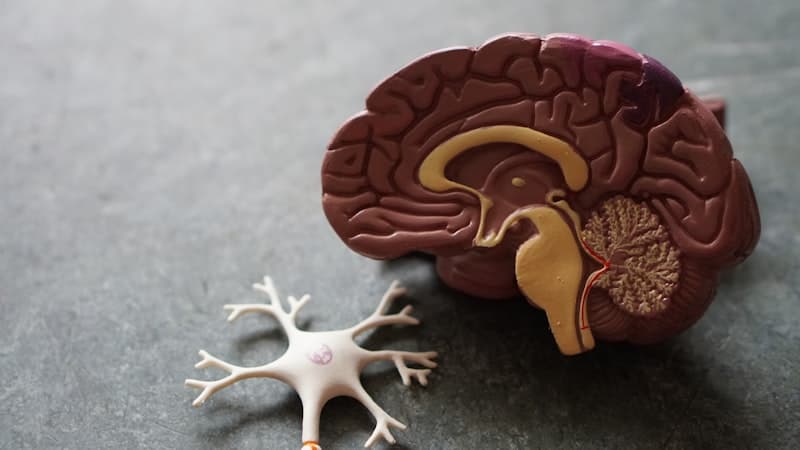
This is the part that took me a minute to wrap my head around, because glycine is usually described as "calming." That's only half the story.
Glycine is not just "calming" — it's also an NMDA co-agonist
Glycine does two things in your nervous system, and they pull in opposite directions. In the spinal cord and brainstem, glycine acts as an inhibitory neurotransmitter — it quiets motor neurons, which is part of why it feels relaxing. But in the forebrain, glycine acts as a co-agonist at the NMDA receptor, the same receptor glutamate uses to drive excitation. NMDA receptors need both glutamate and a glycine-site ligand (glycine or D-serine) to fire, and glycine fills that slot (Mothet et al., Journal of Neurochemistry, 2015, PMID 26088787; Jewett & Thapa, StatPearls, NCBI Bookshelf NBK519495).
Here's the wrinkle that explains a lot of Reddit threads: the same glycine that relaxes your body can, through the NMDA site, amplify cortical excitation in people whose NMDA/glutamate tone is already high. And there's a direct piece of evidence that this isn't theoretical — when researchers worked out how glycine promotes sleep in animal models, they found it does so partly through NMDA receptors in the suprachiasmatic nucleus, and the effect is dose-dependent (Kawai et al., Neuropsychopharmacology, 2015, PMC4397399). In other words, the NMDA pathway isn't separate from glycine's sleep effects — it's central to them. Which also means it's central when those effects go sideways.
For most people at the 3-gram glycine dose used in sleep studies, the inhibitory/cooling effect wins, and they sleep better (Yamadera et al., Sleep and Biological Rhythms, 2007; Bannai & Kawai, 2012, PMID 22293292). But dose higher, or start with a nervous system already tilted toward excitation, and the NMDA-agonist face of glycine can dominate.
A GABA "reverse" response in sensitive nervous systems
Magnesium's sedating reputation rests partly on its relationship with GABA, the brain's main inhibitory transmitter. Magnesium ions interact with GABA receptors and potentiate GABAergic neurotransmission, which dampens neural excitability and helps sleep onset (He et al., 2025, PMC12535714). Magnesium also physically blocks the NMDA receptor channel at rest, putting a ceiling on excitation (Kirkland et al., 2018, PMC6024559).
So in theory, more magnesium should always equal more calm. But the benzodiazepine literature tells us GABAergic drugs don't behave uniformly across nervous systems. A system that's been chronically stressed, sleep-deprived, or is wired differently (ADHD, PTSD, HPA-axis overdrive) can respond to GABAergic input with agitation instead of sedation — the same paradoxical reaction discussed above. The mechanism isn't fully nailed down, but it's real enough to be in anesthesiology textbooks. If your nervous system is in that category, piling on a GABA-modulating supplement can occasionally do the opposite of relax you.
When excitatory glutamate dominates inhibitory glycine
There's a third angle that ties the first two together: the balance between glutamate and GABA. Insomnia is increasingly understood as a state of hyperarousal, and cortical GABA measures are altered in people with primary insomnia — though the direction is more complicated than "too little inhibition," possibly reflecting an allostatic response to chronic arousal (Morgan et al., Sleep, 2012, PMC3353043). Disturbances in glutamatergic and GABAergic neurotransmission are linked to sleep disorders more broadly (Kaczmarski et al., Frontiers in Neuroscience, 2023, PMC10372424). Magnesium's role in dampening excitation is one reason adequate magnesium intake is associated with better sleep (He et al., 2025, PMC12535714).
The implication for the paradoxical-reaction crowd: if your glutamate tone is already cranked — from chronic stress, high caffeine, sleep debt, or hormonal shifts — adding glycine can be like pouring a little gasoline on a fire that's already lit. The glycine you took "for sleep" becomes fuel for the NMDA receptor your brain was already leaning on too hard. The net effect isn't relaxation; it's wired, racing, can't-shut-it-off.
Who Gets This Reaction? Patterns From Reddit

This is where it gets useful, because the reaction isn't random. When I went through the major threads on r/sleep, r/Supplements, r/Menopause, and r/adhdwomen about glycinate-induced insomnia, the complaints clustered into recognizable types — and the type maps onto which community it came from. That's not coincidence; it hints at the underlying nervous-system state that makes the paradoxical reaction more likely.
| Community | Typical reaction pattern | Common accompanying features | Likely contributing factor |
|---|---|---|---|
| r/sleep (general users) | Eyes snap open 30–60 min after taking, can't fall asleep at all | Dose 200–400 mg elemental Mg, taken right at bedtime, often first night | Timing + dose — glycine peaks while brain is trying to downshift |
| r/Menopause | Works great for 1–3 weeks, then "flips" and starts causing wake-ups | Hormonal transition, low estrogen, often combined with other sleep aids | Estrogen–GABA interaction; receptor sensitivity shifts over weeks |
| r/adhdwomen | Nighttime awakenings, brain fog next day, sometimes anxiety | Often on stimulants (methylphenidate, amphetamine); dopamine/glutamate tone | High glutamate tone from stimulants + neurodevelopmental differences |
| r/Supplements | Anxiety, palpitations, restlessness rather than pure insomnia | Stacked with other supplements (L-theanine, ashwagandha, 5-HTP) | Cumulative excitatory or serotonergic load |
A few things jump out. First, the r/sleep pattern — acute, dose-and-timing-driven, night one — is the easiest to fix: lower the dose or move it earlier. Second, the r/Menopause "it worked then flipped" pattern suggests receptor adaptation over weeks, which is why pushing through rarely works for that group. Third, the ADHD-and-stimulants overlap points straight at the glutamate/NMDA mechanism — stimulants raise glutamate and dopamine tone, which is exactly the soil where glycine's NMDA-agonist face takes over.
These are patterns distilled from public threads, not a controlled study. But they line up cleanly with the mechanism above, and more usefully, they tell you which fix is likely to work for your version of the reaction.
Note on sources: Reddit threads are referenced for context, but the mechanism and patterns above are the author's interpretation grounded in the peer-reviewed citations throughout. Thread excerpts are short; the classification is original analysis.
Dose and Timing — When Glycinate Tips From Calming to Activating
If you react badly to glycinate, dose and timing are the first two knobs to turn before you throw the bottle out.
Dose. The glycine dose that's been shown to improve sleep in human studies is around 3 grams of glycine (roughly 1–2 standard glycinate capsules depending on the brand's elemental magnesium), taken before bed (Bannai & Kawai, 2012, PMID 22293292; Yamadera et al., 2007). Push well past that — some people take 400+ mg elemental Mg which can mean 4+ grams of glycine depending on the chelation ratio — and you're in territory where the NMDA-agonist effect may start to outweigh the inhibitory one. For people prone to the paradoxical reaction, less is genuinely more, and a lower dose moved earlier often fixes things without switching forms.
Timing. Taking glycinate the moment your head hits the pillow is the worst timing for the paradoxical crowd, because the glycine peak arrives precisely when your brain is trying to power down. Moving the dose to 2 hours before bed (or even late afternoon) lets the acute peak pass and leaves the gentler magnesium effect for actual sleep onset. Whether you take it with food also changes absorption kinetics — our empty stomach vs with food guide breaks down how that shifts the curve.
The "loading dose" trap. A sneaky pattern: you take glycinate for a week with no issue, then suddenly can't sleep. This looks like tolerance flipping to intolerance, and it's especially common in the r/Menopause group. Magnesium and glycine can accumulate subtle effects on receptor sensitivity, and a dose that felt calming on day one can feel activating on day ten. If you've been fine and suddenly aren't, dose and cumulative exposure is the prime suspect, not a new brand problem. For the elemental-magnesium math (especially if you're also dosing for restless legs), our RLS dosing guide walks through the conversion.
Should You Stop, or Push Through? (The 48–72 Hour Decision)
Here's the short, honest answer: if glycinate is keeping you awake, stop. Don't push through hoping to adapt.
There's no good evidence that you "get used to" a paradoxical glycine/NMDA reaction, and plenty of anecdotal evidence (and basic common sense) that lying awake for a week waiting to adapt just deepens the sleep debt and entrenches insomnia anxiety. The standard, safe move is:
- Stop the glycinate tonight. Switch to a non-glycine form or skip magnesium entirely for a few days.
- Watch the next 48–72 hours. If sleep improves, glycinate was very likely the culprit. If it doesn't improve, the cause is elsewhere — caffeine, sleep hygiene, stress, thyroid, medication timing — and magnesium is innocent.
- Don't restart glycinate even if you sleep better, just to "test" it. The reaction is reproducible, and you don't owe the supplement a second chance.
If you're still not sleeping after 72 hours off glycinate, that's the signal to zoom out: the magnesium wasn't the issue, and chronic insomnia deserves a conversation with a doctor rather than another round of supplement roulette. This isn't a substitute for medical advice — for persistent insomnia, especially with anxiety, mood changes, or medical conditions, please talk to a healthcare professional.
Which Magnesium Form to Switch To

This is the part most people in the Reddit threads actually want: fine, glycinate doesn't work for me — what do I take instead? Glycinate isn't the only "calming" form; it's just the most-hyped one. Depending on how glycinate went wrong, a different form sidesteps the problem entirely.
If magnesium GLYCINATE caused paradoxical insomnia, ask:

Q1 — Was anxiety / racing thoughts / agitation the main symptom?
├─ YES → Magnesium THREONATE
│        (brain-penetrating form; no glycine load; start low dose)
└─ NO  → go to Q2

Q2 — Was it more physical — heart pounding, muscle tension, restlessness?
├─ YES → Magnesium TAURATE
│        (magnesium + taurine; cardiovascular/calm angle; no glycine)
└─ NO  → go to Q3

Q3 — Is the real issue daytime fatigue + wrecked sleep rhythm, not bedtime anxiety?
├─ YES → Magnesium MALATE
│        (take in the MORNING, not at night; supports energy metabolism)
└─ NO  → go to Q4

Q4 — Does ANY oral magnesium seem to mess with your sleep or gut?
└─ YES → Skip oral. Use EPSOM SALT baths (transdermal magnesium route)
A few notes on each branch. Threonate (magnesium L-threonate) was designed to cross into the brain efficiently and carries no glycine, so it sidesteps the NMDA-agonist problem entirely. Taurate pairs magnesium with taurine, which itself modulates GABA and calms the cardiovascular system — useful when the reaction feels physical. Malate is best thought of as a daytime form (it feeds the Krebs cycle), which sounds counterintuitive for sleep until you realize that fixing daytime energy and circadian rhythm is sometimes the real sleep fix. For a deeper, science-first comparison of these forms, our magnesium glycinate vs threonate vs citrate guide is the main pillar post.
And if your nervous system just doesn't like oral magnesium in any form — some people report every pill version disrupts sleep — the transdermal route via Epsom salt baths is a legitimate workaround. It bypasses the gut entirely; our Epsom salt / transdermal magnesium guide covers when that route actually makes sense.
Whichever form you land on, give it a week before judging. Magnesium's sleep effects are subtle and cumulative, and one bad night on a new form doesn't mean it's wrong — it may just mean you're still paying off the sleep debt from glycinate.
What If You Were Already Taking Melatonin?
A surprisingly common version of this story: you were already using melatonin for sleep, it was working okay, and you added glycinate on top expecting a synergy — and instead the combination kept you up. The logic of stacking them is sound on paper (melatonin shifts the circadian signal; magnesium supports GABA), but in practice the stack can backfire for the same paradoxical-reaction subset of people.
Glycine's NMDA role can disrupt the smooth transition into sleep that melatonin is trying to set up, and some people report more vivid, fragmented, or shallow sleep on the combination rather than deeper sleep. If glycinate-on-top-of-melatonin is what wrecked your night, the cleanest experiment is to drop the glycinate and return to melatonin alone, then reassess after a few nights. For the broader question of which one deserves a place in your routine, our magnesium vs melatonin comparison lays out the evidence side by side.
The general principle: when a stack goes wrong, simplify before you optimize. Adding more things to a broken combo rarely fixes it.
Quick Checklist — Is It Really the Magnesium Glycinate?
Before you blame glycinate, run through this. It'll save you from ditching a supplement that wasn't actually the problem (or from keeping one that was):
- Was glycinate the only new thing you started in the last 2 weeks? (If you also started ashwagandha, a new med, or quit caffeine, the cause is ambiguous.)
- Did you recently increase the dose? Cumulative glycine load is a common trigger.
- Did your caffeine, alcohol, or prescription med intake change at the same time?
- Are you under more stress than usual, or sleeping less than usual? High glutamate tone makes the reaction more likely.
- Timing: did you take it within 30 minutes of lights-out? Try moving it 2 hours earlier first.
- Stop test: did sleep improve within 72 hours of stopping glycinate?
- Re-challenge: (optional, only if curious) does the same dose reproduce it on a different day? A reproducible reaction is strong evidence.
If most of these point at glycinate, they point at glycinate. Stop, switch forms, move on.
The Takeaway
Three things to walk away with:
- Glycinate is calming for most people, but not all. Through glycine's role as an NMDA co-agonist — and through paradoxical GABAergic responses in sensitive nervous systems — it can produce the exact insomnia it was supposed to fix. This is a plausible, mechanism-based reaction, not a myth.
- The reaction clusters in predictable groups. Hormonal transitions (perimenopause/menopause), ADHD and stimulant use, high cumulative glycine dose, and stacked supplement regimens all show up repeatedly in the patterns. Find your pattern and the fix usually follows.
- Don't push through — switch. Stop glycinate, wait 48–72 hours, and if sleep improves, move to a non-glycine form: threonate for anxiety, taurate for physical tension, malate for daytime rhythm, or transdermal Epsom salt if oral magnesium in general doesn't agree with you.
If this helped you debug your own reaction, I'd genuinely like to know which form you switched to and how it went — the comments are where the real dataset lives, and these patterns get sharper every time someone adds their case. If you want to go deeper, the magnesium glycinate vs threonate vs citrate pillar post and the restless-legs dosing guide are the natural next reads.
This article is for general information only and is not medical advice. If insomnia is persistent, worsening, or accompanied by anxiety, mood changes, or a medical condition, please consult a qualified healthcare professional before starting or stopping any supplement.
References
- Kirkland AE, Sarlo GL, Holton KF. The Role of Magnesium in Neurological Disorders. Nutrients. 2018;10(6):730. PMC6024559.
- He C, Wang B, Chen X, Xu J, Yang Y, Yuan M. The Mechanisms of Magnesium in Sleep Disorders. Nature and Science of Sleep. 2025;17:1543-1561. PMC12535714.
- Bannai M, Kawai N. New therapeutic strategy for amino acid medicine: glycine improves the quality of sleep. Journal of Pharmacological Sciences. 2012;118(2):145-148. PMID 22293292.
- Kawai N, Sakai N, Okuro M, Karakawa S, Tsuneyoshi Y, Kawasaki N, Takeda T, Bannai M, Nishino S. The sleep-promoting and hypothermic effects of glycine are mediated by NMDA receptors in the suprachiasmatic nucleus. Neuropsychopharmacology. 2015;40(6):1405-1416. PMC4397399.
- Yamadera W, Inagawa K, Chiba S, Bannai M, Takahashi M, Nakayama K. Glycine ingestion improves subjective sleep quality in human volunteers, correlating with polysomnographic changes. Sleep and Biological Rhythms. 2007;5(2):126-131. doi:10.1111/j.1479-8425.2007.00262.x.
- Mothet JP, Le Bail M, Billard JM. Time and space profiling of NMDA receptor co-agonist functions. Journal of Neurochemistry. 2015;135(2):210-225. PMID 26088787.
- Jewett BE, Thapa B. Physiology, NMDA Receptor. StatPearls. NCBI Bookshelf. NBK519495.
- Mancuso CE, Tanzi MG, Gabay M. Paradoxical reactions to benzodiazepines: literature review and treatment options. Pharmacotherapy. 2004;24(9):1177-1185. PMID 15460178.
- Saïas T, Gallarda T. [Paradoxical aggressive reactions to benzodiazepine use: a review]. L'Encéphale. 2008;34(4):330-336. PMID 18922233.
- Morgan PT, Pace-Schott EF, Mason GF, et al. Cortical GABA levels in primary insomnia. Sleep. 2012;35(6):793-797. PMC3353043.
- Kaczmarski P, Sochal M, Strzelecki D, Białasiewicz P, Gabryelska A. Influence of glutamatergic and GABAergic neurotransmission on obstructive sleep apnea. Frontiers in Neuroscience. 2023;17:1187866. PMC10372424.
KSM-66 vs Sensoril Ashwagandha: Which Extract for Sleep vs Anxiety?
Next →Collagen Before or After Workout: What Timing Actually Does (By Goal)