Resistance Bands vs Free Weights: Which Builds More Muscle? (Science-Backed 2026 Guide)
Resistance bands vs free weights -- which builds more muscle? Compare EMG data, joint safety, cost, and beginner picks in this 2026 science-backed guide.
Resistance Bands vs Free Weights: Which Builds More Muscle? (Science-Backed 2026 Guide)
Walk into any home gym in 2026 and you will probably see two things: a set of resistance bands stuffed in a drawer and a pair of dumbbells sitting in the corner. The global home fitness equipment market has blown past $15 billion, and the two tools most people reach for first are elastic bands and free weights. But here is the question that keeps showing up in fitness forums, physical therapy clinics, and kitchen-table conversations: can resistance bands really replace free weights?
The short answer is no -- but the longer answer is more interesting than you might expect.
I have been training with both for over a decade. I have used bands in hotel rooms, physio clinics, and my own living room. I have also spent years under a barbell, pressing dumbbells, and chasing numbers on compound lifts. And I have gone through the EMG studies, the resistance profiles, and the clinical rehabilitation research so you do not have to.
The resistance bands vs free weights debate comes down to one fundamental difference: free weights give you constant gravitational resistance that maximizes mechanical tension at every point in a lift. Resistance bands give you variable elastic resistance that peaks at the top and barely registers at the bottom. That difference ripples through everything -- muscle growth, strength development, joint safety, cost, and practicality.
If you are completely new to strength training, our complete beginner's guide covers the fundamentals this article builds on. And if you are trying to decide between specific free weight tools, our dumbbell vs kettlebell comparison breaks down those two in detail.
But if you are here for the bands-vs-weights showdown, let me walk you through what the science actually says.
Quick Answer -- Are Resistance Bands as Effective as Free Weights?
Both resistance bands and free weights build muscle and strength effectively, but they do so through fundamentally different resistance profiles. Free weights provide constant gravitational resistance that maximizes mechanical tension at every point in the lift -- the primary driver of muscle growth. Resistance bands provide variable resistance that peaks at the top of the movement, which can enhance mind-muscle connection and joint safety but limits the total tension your muscles receive at the most growth-critical portion of the exercise.
Think of it this way. Free weights are like carrying a 50-pound box up a staircase -- the weight is 50 pounds on every step. Resistance bands are like stretching a giant rubber band -- it is easy at first and brutally hard at the end. Both make you stronger. But the staircase gives you a more consistent challenge throughout.
| Free Weights | Resistance Bands | |
|---|---|---|
| Best for | Maximum muscle growth, strength development, bone density | Joint rehabilitation, travel training, budget home workouts |
| Resistance type | Constant -- same load throughout the movement | Variable -- increases as the band stretches |
| Muscle growth | Excellent -- consistent mechanical tension | Good -- especially for beginners, but limited by variable tension |
| Max strength | Excellent -- heavy compound lifts possible | Limited -- max resistance typically 50--150 lbs |
| Joint stress | Moderate -- constant load at all joint angles | Low -- resistance decreases at vulnerable joint positions |
| Cost to start | $20--$80 (basic pair) / $200+ (adjustable) | $20--$50 (full set) |
| Portability | Low to moderate -- dumbbells are heavy | Excellent -- fits in a drawer or suitcase |
| Ideal user | Anyone focused on building muscle and strength | Beginners, travelers, rehab patients, budget-constrained lifters |
What Makes Resistance Bands and Free Weights Different? (Resistance Profiles and Physics)

Before we get into muscle growth and strength comparisons, you need to understand the physics. This is not abstract theory -- it is the single most important factor that separates these two training tools.
Constant Resistance (Free Weights) vs Variable Resistance (Bands)
When you pick up a 50-pound dumbbell, it weighs 50 pounds at the bottom of your curl, 50 pounds in the middle, and 50 pounds at the top. Gravity does not care where you are in the movement. This is constant gravitational resistance, and it is exactly what your muscles are built to handle.
A resistance band works differently. When you anchor a band and start pulling, there is almost no resistance at first. As you stretch it further, the resistance climbs. By the time your arm is fully extended, the band is fighting back with maximum force. This is variable elastic resistance, and it creates a fundamentally different training stimulus.
Here is why that matters. Your muscles have a strength curve -- they are stronger at certain joint angles and weaker at others. This is called the length-tension relationship. With free weights, the load stays the same regardless of where your muscle is strongest or weakest. With bands, the resistance roughly follows your strength curve: less resistance when your muscle is in its weakest stretched position, more resistance when your muscle is in its strongest contracted position.
That sounds ideal in theory -- you get challenged most where you are strongest. But for muscle growth, the research points in a different direction. The stretched position of a muscle (where it is under the most tension at its longest length) appears to be a powerful stimulus for hypertrophy. A 2023 meta-analysis by Pedrosa and colleagues published in the Journal of Strength and Conditioning Research found that training at long muscle lengths produced significantly greater hypertrophy than training at short muscle lengths. This is precisely where resistance bands provide the least resistance.
That does not make bands useless -- far from it. But it does mean that if maximum muscle growth is your goal, the variable resistance profile of bands is a meaningful limitation compared to the constant tension provided by free weights.
Research supports the nuance. Andersen et al. (2010), publishing in the European Journal of Applied Physiology, compared elastic resistance training to weight machine training over 10 weeks and found that both groups achieved significant muscle growth. However, the weight-based group showed slightly greater gains in muscle cross-sectional area, particularly in the lower body.
Types of Resistance Bands and Free Weights
Not all bands are the same, and neither are all free weights. Understanding the options helps you pick the right tool for the job.
Resistance band types:
- Loop bands -- continuous circular bands, the most common type. Used for squats, hip thrusts, pull-up assistance, and full-body work
- Tube bands with handles -- elastic tubes with clip-on handles. Good for curls, presses, and rows
- Mini bands -- small loop bands worn above the knees or ankles. Excellent for glute activation and hip stability
- Power bands -- thick, heavy-duty bands. Used for pull-up assistance, banded barbell work, and as barbell substitutes
Free weight types:
- Dumbbells -- the most versatile free weight. Each hand works independently, making them ideal for unilateral training
- Barbells -- the tool for maximal strength. Squats, deadlifts, bench press, and overhead press are all barbell staples
- Kettlebells -- offset center of mass enables ballistic movements. Our dumbbell vs kettlebell guide covers these in detail
Design comparison:
| Feature | Resistance Bands | Free Weights |
|---|---|---|
| Resistance type | Variable elastic | Constant gravitational |
| Weight range | 5--150 lbs (approximate) | 1--400+ lbs |
| Weight progression | Color/thickness steps (large jumps) | Small increments (2.5--5 lbs) |
| Grip options | Limited -- wrap around hands or use handles | Multiple -- overhand, underhand, neutral, mixed |
| Durability | 6--24 months (latex degrades) | Essentially forever |
| Portability | Excellent -- fits in a bag | Poor to moderate |
| Price range | $20--$80 (full set) | $20--$600+ (depending on type) |
Resistance Bands vs Free Weights for Muscle Growth (What EMG Studies Show)

This is the question most people are really asking when they search for resistance bands vs dumbbells for muscle growth: can those colorful elastic strips really build the same kind of muscle as iron? The honest answer is yes -- but with real limitations that matter more as you get stronger. And if you are wondering specifically are resistance bands as effective as weights for triggering hypertrophy, the answer depends heavily on your training experience and how you use them.
What the EMG Research Says
Electromyography (EMG) measures the electrical activity in your muscles during exercise. Higher EMG activation generally means more muscle fibers are firing, which correlates with greater growth potential. Several studies have directly compared resistance bands and free weights using EMG, and the results are more nuanced than most fitness articles suggest.
Aboodarda et al. (2016), publishing in the Journal of Sports Sciences, compared bicep curls performed with resistance bands versus dumbbells. The finding? Overall EMG activation in the biceps was remarkably similar between the two tools. But there was an important difference in the pattern: band curls produced higher activation at the top of the movement (where the band was most stretched) and lower activation at the bottom (where the band was slack). Dumbbell curls produced more consistent activation throughout the entire range of motion.
Jakobsen et al. (2014), in the European Journal of Applied Physiology, ran a 10-week training study comparing elastic resistance to machine-based resistance training. Both groups gained significant muscle. The machine-based group, however, showed approximately 10--15% greater muscle cross-sectional area growth on average. The difference was most pronounced in lower body compound movements.
The takeaway is straightforward: resistance bands vs weights study research consistently shows that bands can build muscle, especially for beginners and in single-joint exercises. But when researchers measure the same exercises head-to-head over weeks and months, free weights consistently produce slightly greater hypertrophy -- particularly in large muscle groups and compound movements. The gap widens as lifters become more advanced.
The Progressive Overload Problem
This is where free weights pull ahead decisively for muscle growth. Progressive overload -- gradually increasing the resistance over time -- is the engine that drives muscle growth. Without it, your muscles have no reason to adapt and grow.
Free weights make progressive overload precise. Adjustable dumbbells let you increase by 2.5 or 5 pounds at a time. Barbells let you add 1.25-pound plates to each side. This matters because muscle growth responds best to small, consistent increases in loading. A 2022 systematic review in the Journal of Strength and Conditioning Research found that progressive overload was the single strongest predictor of hypertrophy across all training variables.
Resistance bands make this hard. The jumps between band levels can be 10--20 pounds or more. Going from a medium band to a heavy band is not like going from a 25-pound dumbbell to a 30-pound dumbbell. It is more like going from 25 to 40. That is a huge leap, and it often leaves you stuck -- the lighter band feels too easy but the heavier one is impossible for the target rep range.
You can work around it. Stack multiple bands. Slow your tempo to 3-1-3. Add pauses at the point of maximum tension. Combine bands with blood flow restriction (BFR) training. These strategies work, but they require more thought, more setup, and more trial and error than simply adding 5 pounds to a dumbbell. And they still cannot fully replicate the consistent mechanical tension that free weights provide through the full range of motion.
Body Part Breakdown: Which Tool Wins Where?
| Body Part | Free Weight Advantage | Band Advantage | Winner |
|---|---|---|---|
| Biceps | Precise curls, constant tension | Tension curve matches the curl movement pattern | Tie |
| Shoulders | Overhead press, lateral raises | Continuous tension on lateral raises | Free Weight (slight) |
| Chest | Bench press, flyes | Push-up assistance, chest press | Free Weight |
| Back | Rows, pull-ups, deadlifts | Pull-aparts, face pulls | Free Weight |
| Legs | Squats, lunges, RDLs | Hip thrusts, glute bridges, lateral walks | Free Weight |
| Core | Some carryover | Nearly every band exercise activates core | Band (slight) |
| Glutes | Hip thrusts, lunges | Band walks and hip thrust variations excel | Band |
Notice a pattern? Free weights win most categories for a reason: consistent tension and precise loading matter for muscle growth. But bands have their sweet spots -- glute work and core activation are areas where bands genuinely shine.
Resistance Bands vs Weights for Strength Training -- Can Bands Match Free Weights?
This is where the gap between bands and free weights becomes most obvious. Muscle growth (hypertrophy) and maximal strength are related but not identical. You can build bigger muscles without necessarily building maximum strength, and vice versa. The distinction matters here.
Maximal strength is defined as the maximum amount of force you can produce in a single effort -- your one-rep max (1RM). Developing it requires training at high loads (80--95% of your 1RM) with compound movements like squats, deadlifts, bench presses, and overhead presses. These are movements where you can load hundreds of pounds and progressively increase that load over time.
Free weights are built for this. A barbell back squat can be loaded to 400, 500, even 600+ pounds for advanced lifters. Even a pair of adjustable dumbbells covers 5--90 pounds per hand, which is enough for meaningful strength development in most exercises.
Resistance bands hit a ceiling. The maximum resistance from a heavy band set tops out around 50--150 pounds depending on the brand and how far you stretch it. For a beginner, that is plenty of resistance. For someone who has been training for a year and can squat 200+ pounds, it is a warm-up weight. And the variable resistance profile means the starting portion of any movement provides very little load, which is precisely where maximum strength development requires the most tension.
The research backs this up. A landmark meta-analysis by McMaster et al. (2016) in the Journal of Applied Physiology demonstrated that training to near-failure with lighter loads can produce similar hypertrophy to heavy loads. However -- and this is critical -- the study also confirmed that maximal strength develops best with heavier loads. The group training at 80--90% of 1RM gained significantly more maximal strength than the group training at 30--50% of 1RM, even when both groups achieved similar muscle growth.
The bottom line for strength: If your goal is to get as strong as possible -- to move the most weight you can in the squat, deadlift, press, and row -- free weights are not just better. They are the only realistic option. Resistance bands will help you build a base of strength, especially as a beginner, but they cannot replicate the stimulus of heavy compound lifts loaded at 80--95% of your maximum.
In the resistance bands vs weights for strength training comparison, free weights hold a decisive and well-documented advantage for anyone past the beginner stage.
For a complete introduction to building strength the right way, our strength training for beginners guide walks you through the fundamentals.
Resistance Bands vs Weights for Joints -- Which Is Safer?
This is one of the most important sections in this article, and it is an area where most comparison guides fall short. If you have ever dealt with joint pain, arthritis, or an injury that made you wary of lifting weights, this one is for you.
Why Bands Are Gentler on Joints
The variable resistance profile of bands is not just a physics curiosity -- it has real implications for joint health. When your joint is at its most vulnerable position (typically at the end of its range of motion, where the muscle is stretched and the joint is under the most mechanical stress), a resistance band provides the least resistance. The load naturally decreases where your joint needs it to.
With free weights, the load stays constant regardless of joint angle. A 50-pound dumbbell is 50 pounds whether your elbow is fully bent or fully extended. At the bottom of a bicep curl, when your bicep tendon is under maximum stretch, you are still holding that full 50 pounds. For healthy joints, this is fine -- it is what they are designed to handle. But for inflamed, injured, or arthritic joints, that constant load at the extremes of motion can be painful and potentially harmful.
This is precisely why physical therapists overwhelmingly choose resistance bands for rehabilitation programs. Hughes et al. (1999) published in Physical Therapy that elastic resistance training was effective and safe for rehab patients across a wide range of conditions. The variable resistance naturally accommodates joint limitations, allowing patients to strengthen muscles without aggravating damaged tissue.
When people ask about resistance bands vs weights for joints, the answer favors bands for anyone dealing with pain, injury, or age-related joint wear.
When Free Weights Are Better for Joint Health
Here is the other side of the coin. Free weights -- specifically weight-bearing exercise -- are one of the most effective tools for building bone mineral density. This matters enormously for long-term joint and skeletal health.
Your bones respond to mechanical loading. When you place heavy loads on your skeleton through exercises like squats, deadlifts, and overhead presses, specialized cells called osteoblasts are stimulated to build new bone tissue. Over time, this makes your bones denser and more resistant to fractures. The National Osteoporosis Foundation lists weight-bearing exercise as one of the most important strategies for preventing and managing osteoporosis.
Resistance bands, because they provide lower absolute loads and the resistance is distributed differently across the movement, do not stimulate bone density growth as effectively. The loading is simply not heavy enough or consistent enough to trigger the same osteoblast response.
There is also the matter of joint stability. Strong muscles around a joint protect it. Free weights allow you to progressively overload the muscles surrounding a joint -- the rotator cuff around the shoulder, the quadriceps and hamstrings around the knee -- to levels that bands cannot match. This muscular support is one of the best defenses against joint injury.
Recommendations for Specific Populations
| Population | Primary Recommendation | Why |
|---|---|---|
| Seniors (65+) | Resistance bands, with light free weights for bone density | Bands are safer and easier to use; light dumbbells maintain bone mineral density |
| Rehab patients | Resistance bands under physical therapist guidance | Variable resistance accommodates healing tissue; consult a professional |
| Arthritis sufferers | Resistance bands for most exercises | Less joint stress at end-range positions; pain-free training is sustainable training |
| Pregnant women | Resistance bands | Lower abdominal pressure, variable resistance accommodates changing body mechanics |
| Healthy adults | Both -- bands for warm-ups and joint-friendly work, free weights for heavy loading | Combines the joint-protective benefits of bands with the bone-building and strength benefits of free weights |
If you are dealing with a specific injury or condition, talk to a physical therapist or doctor before starting any training program. The advice above is general, and individual needs vary significantly.
Can You Build Muscle with Resistance Bands Alone? (The Honest Answer)
Yes, but with limitations you should understand before committing.
If you are a beginner, resistance bands alone can produce visible, meaningful muscle growth in your first 3--6 months of training. This is not marketing hype -- it is supported by the research we discussed earlier from Andersen et al. (2010) and Colado et al. (2010), both of which demonstrated significant muscle growth from elastic resistance training over 8--12 weeks.
Your muscles do not know whether the resistance comes from a band, a dumbbell, or a cable machine. They only know tension. If you provide enough tension to challenge them within the 8--15 rep range, take sets close to failure, and do this consistently over weeks and months, they will grow. Bands can absolutely provide that stimulus, especially in the early stages of training.
The Most Effective Band-Only Strategies
If you are going to train with bands alone, these strategies maximize your results:
- Stack multiple bands to bridge the gap between resistance levels. Using a light and medium band together gives you more precise control over total resistance
- Use a slow tempo (3-1-3) -- three seconds up, one-second pause, three seconds down. This maximizes time under tension and metabolic stress
- Train to near-failure. Your last 2--3 reps should be genuinely hard. If you could do 5 more reps, you are not providing enough stimulus
- Prioritize compound movements. Banded squats, presses, and rows over bicep curls and tricep extensions. Compound movements give you more muscle growth per exercise
- Consider combining with blood flow restriction (BFR) bands. Research published in the Journal of Applied Physiology shows BFR training with light loads produces hypertrophy comparable to heavy-load training
The Honest Limitations
Here is where the "bands alone" approach runs into trouble for anyone beyond the beginner stage.
Large muscle groups like your chest (bench press), quads (squat), and hamstrings (deadlift) are capable of moving serious weight. An intermediate lifter can squat 150--200+ pounds and deadlift 200--300+ pounds. Resistance bands top out around 50--150 pounds of resistance. No matter how creatively you stack them, there is an upper limit that falls well below what most intermediate lifters need for continued progress.
The progressive overload problem also gets worse over time. As you get stronger, the gaps between band resistance levels feel larger, not smaller. A beginner might find a medium band perfectly challenging. Three months later, that same band feels like a warm-up, but the jump to the heavy band is too much for the target rep range.
My practical advice: If budget or space is genuinely tight, start with a quality band set ($20--$50) and train hard for 2--3 months. You will see results. When you are ready to take the next step, invest in a pair of adjustable dumbbells. The combination of bands and dumbbells for under $300 gives you a home gym that covers virtually every training need.
Best Exercises Compared: 5 Band Exercises and 5 Free Weight Exercises

The best way to understand where each tool excels is to look at their signature exercises. Here are five go-to movements for each.
5 Essential Resistance Band Exercises
1. Banded Hip Thrust
- Target muscles: Gluteus maximus, hamstrings
- Why bands excel: The band provides maximum resistance at the top of the thrust, precisely where the glutes are strongest and can produce the most force. This matches the strength curve better than a barbell or dumbbell
- Beginner tip: Place the band just above your hips and anchor it under something heavy. Squeeze your glutes hard at the top for a full second
2. Banded Face Pull
- Target muscles: Rear deltoids, rhomboids, external rotators
- Why bands excel: Constant tension throughout the movement trains the small muscles of the upper back and rotator cuff more effectively than most free weight alternatives. This exercise should be in every program for shoulder health
- Beginner tip: Pull the band toward your face (hence the name), separating your hands as you pull. Think about squeezing your shoulder blades together
3. Banded Lateral Walk (Monster Walk)
- Target muscles: Gluteus medius, tensor fasciae latae
- Why bands excel: The band provides continuous abduction resistance that is nearly impossible to replicate with free weights. Critical for knee stability and hip health
- Beginner tip: Place the mini band just above your knees. Take wide steps sideways while staying in a half-squat position
4. Banded Chest Press
- Target muscles: Pectoralis major, anterior deltoids, triceps
- Why bands excel: Anchor the band behind you and press forward. The resistance increases as you extend your arms, providing a unique challenge at lockout that dumbbells do not match
- Beginner tip: Stagger your stance for balance. Control the return -- do not let the band snap you back
5. Banded Pull-Apart
- Target muscles: Rear deltoids, rhomboids, lower trapezius
- Why bands excel: This is arguably the single best exercise for shoulder health and posture. The band provides smooth, continuous tension that trains the muscles responsible for pulling your shoulders back and down
- Beginner tip: Hold the band at chest height with arms extended. Pull apart until the band touches your chest, then slowly return
5 Essential Free Weight Exercises
1. Dumbbell Goblet Squat
- Target muscles: Quadriceps, glutes, core
- Why free weights excel: Holding a dumbbell vertically against your chest as a counterbalance allows you to squat deeper with better form than almost any other variation. It is the perfect beginner squat
- Beginner tip: Drive your elbows inside your knees at the bottom. Keep your chest proud
2. Dumbbell Overhead Press
- Target muscles: Anterior and lateral deltoids, upper chest, triceps
- Why free weights excel: Each arm works independently, preventing strength imbalances. The constant load through the full range of motion builds real shoulder strength
- Beginner tip: Brace your core hard before pressing. A wobbly midsection means a weaker press
3. Dumbbell Romanian Deadlift (RDL)
- Target muscles: Hamstrings, glutes, erector spinae
- Why free weights excel: The constant gravitational load through the full hip hinge provides consistent tension in the hamstrings, which is critical for both growth and strength
- Beginner tip: Feel the stretch in your hamstrings, not your lower back. If your back rounds, the weight is too heavy
4. Dumbbell Bench Press
- Target muscles: Pectoralis major, anterior deltoids, triceps
- Why free weights excel: The dumbbell bench press provides a greater range of motion and better pectoral activation than a barbell bench press, according to EMG research. Each side works independently
- Beginner tip: Lower the dumbbells to chest level with control. Do not bounce at the bottom
5. Dumbbell Bent-Over Row
- Target muscles: Latissimus dorsi, rear deltoids, biceps, rhomboids
- Why free weights excel: The row is the single most important exercise for back development, and dumbbells allow a natural, unrestricted pulling path. You get a full stretch at the bottom and a hard squeeze at the top
- Beginner tip: Pull toward your hip, not your chest. Your elbow should travel past your torso at the top
Want to see how kettlebells compare to dumbbells for these and other movements? Our dumbbell vs kettlebell guide has a detailed exercise-by-exercise breakdown.
Resistance Bands vs Free Weights for Home Gym -- Space, Cost, and Practicality
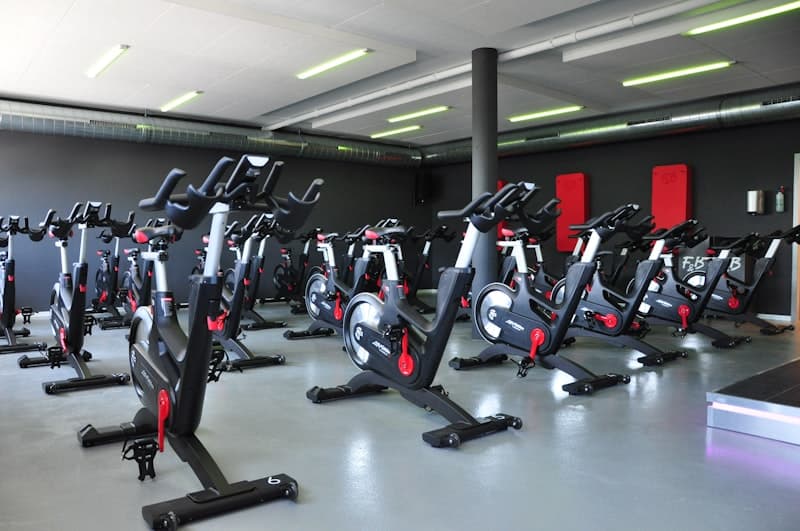
Most people reading this are building a home gym, not outfitting a commercial facility. Let me break down the real-world costs, space needs, and practical considerations.
Cost Comparison
| Setup | Approximate Cost | What You Get |
|---|---|---|
| Full band set (5 resistances) | $20--$50 | 5 resistance levels, full-body training |
| Premium band set + door anchor | $40--$80 | Multiple bands + accessories for a complete home gym |
| Single pair of dumbbells (fixed) | $20--$80 | One weight, limited exercise variety |
| Adjustable dumbbell pair | $200--$600 | Full weight range (5--90 lbs each) |
| Barbell + plates (basic set) | $200--$500 | 100--300 lb capacity, compound lifts |
| Best budget combo | $50--$120 | Band set + light adjustable dumbbells |
The math is straightforward. For under $50, a resistance band set gives you full-body training capability. For under $120, you can have bands plus light adjustable dumbbells. For a serious home gym with adjustable dumbbells that go up to 50--90 lbs per hand, you are in the $200--$600 range.
Beginner Weight/Resistance Recommendations
| Your Body Weight | Recommended Starting Band | Recommended Starting Dumbbell |
|---|---|---|
| Under 130 lbs | Light-medium band set | 5--15 lb pair |
| 130--170 lbs | Medium band set | 10--20 lb pair |
| 170--210 lbs | Medium-heavy band set | 15--25 lb pair |
| Over 210 lbs | Heavy band set | 20--30 lb pair |
These are starting points. You will outgrow them, which is exactly the point -- it means you are getting stronger.
Space Requirements
A full resistance band set fits in a single drawer. You can stuff it in a backpack, a suitcase, or a desk drawer at the office. It takes up essentially zero permanent space.
Adjustable dumbbells need about 2 square feet of floor space. A barbell with a basic rack needs 15--30 square feet of dedicated space.
If you are training in a small apartment, a dorm room, or a shared living space, bands win the space contest by a mile. If you have a spare room or garage, free weights become much more practical.
When evaluating resistance bands vs free weights for home gym setups, the decision often comes down to available square footage and budget more than anything else.
Resistance Bands vs Free Weights -- Complete Comparison Table
| Factor | Free Weights | Resistance Bands |
|---|---|---|
| Resistance type | Constant gravitational | Variable elastic |
| Muscle growth potential | Excellent -- consistent tension through full ROM | Good -- especially for beginners and single-joint work |
| Max strength development | Excellent -- heavy compound lifts | Limited -- max ~50--150 lbs |
| Joint stress | Moderate -- constant load at all angles | Low -- less load at vulnerable positions |
| Bone density benefit | Excellent -- heavy loading stimulates osteoblasts | Limited -- lower absolute loads |
| Progressive overload precision | Excellent -- 2.5--5 lb increments | Limited -- large jumps between band levels |
| Portability | Poor to moderate | Excellent -- fits anywhere |
| Durability | Essentially permanent | 6--24 months (replace regularly) |
| Cost to start | $20--$80 (basic) / $200+ (adjustable) | $20--$50 (full set) |
| Space needed | 2--30+ sq ft depending on setup | Near zero |
| Learning curve | Moderate -- form matters for heavy lifts | Low -- most exercises are intuitive |
| Exercise variety | Very high | Moderate -- limited by max resistance |
| Rehabilitation suitability | Moderate -- requires form mastery | Excellent -- used by physical therapists |
| Beginner friendliness | High (dumbbells) / Moderate (barbells) | Very high |
| Travel-friendly | Not really | Absolutely |
| Wear and maintenance | Minimal | Bands degrade with sunlight, heat, and use |
A few of these deserve a closer look.
Durability. This is an often-overlooked cost factor. Your dumbbells will outlast you. Your resistance bands will not. Latex bands degrade from UV exposure, heat, sweat, and repeated stretching. Most bands last 6--24 months depending on how often you use them and how you store them. That $30 band set is not a one-time purchase -- it is a recurring cost.
Exercise variety. Free weights win here because there is no upper limit to the resistance you can apply. As you get stronger, you simply add more weight. With bands, you eventually hit a ceiling where the heaviest band you can find is not heavy enough to challenge your strongest muscle groups.
Learning curve. Bands are genuinely easier to learn. There is no risk of dropping heavy weight on yourself, no complex barbell mechanics to master. For someone who is intimidated by free weights, bands provide a low-pressure entry point into resistance training.
Which Should You Choose? (Purpose-Based Recommendations)
There is no single winner in the resistance bands vs free weights debate. But there is a clear winner for your situation. Here is the breakdown.
| Your Primary Goal | Best Choice | Why |
|---|---|---|
| Maximum muscle growth | Free weights | Constant mechanical tension and precise progressive overload |
| Maximum strength | Free weights | Heavy compound lifts at 80--95% 1RM |
| Joint rehabilitation | Resistance bands | Variable resistance decreases load at vulnerable joint angles |
| Senior fitness (65+) | Resistance bands (+ light free weights) | Safe, easy to use, gentle on joints; add light weights for bone density |
| Home gym (minimal space) | Resistance bands | Fits in a drawer, zero footprint |
| Home gym (adequate budget) | Free weights + bands | Combines the strengths of both tools |
| Travel / hotel workouts | Resistance bands | Stuff them in a bag and train anywhere |
| Fat loss | Both | Muscle gain from either tool raises resting metabolic rate |
| Beginner (tight budget) | Resistance bands | $20--$50 covers full-body training |
| Beginner (flexible budget) | Adjustable dumbbells | Better long-term progressive overload |
| Best overall approach | Both together | Bands for warm-ups, rehab, and accessory work. Free weights for primary muscle-building and strength movements. |
My Honest Recommendation for Beginners
If your budget is genuinely tight, a $30--$50 resistance band set is one of the best fitness investments you can make. You will get stronger. You will build visible muscle. You will establish the habit of training consistently. Those first 2--3 months with bands alone can transform how you look and feel.
But if you are serious about building muscle and strength long-term, eventually you need to add free weights. A pair of adjustable dumbbells in the $200--$400 range gives you precise progressive overload from 5 to 50+ pounds per hand. Combined with your band set, you have a complete home gym for under $450 that covers every major training goal.
If you are on the fence, start with bands. Train hard for 8--12 weeks. Then add dumbbells when you feel ready. The best program is the one you actually do consistently, and bands remove almost every barrier to starting.
Supporting Your Training Beyond Equipment
Strength training does not exist in a vacuum. What you do outside your workouts determines your results just as much as the equipment you use.
Recovery is where growth happens. If you are training hard with bands or free weights, soreness is part of the deal. Our foam roller vs massage gun comparison breaks down which recovery tool fits your needs and budget.
Nutrition drives adaptation. You cannot build muscle without enough protein, and the source matters. Our plant protein vs whey protein guide covers the science behind both so you can choose what works for you.
Pairing your resistance training with the right cardio can accelerate fat loss and improve conditioning. Our HIIT vs LISS cardio guide explains which approach matches your goals.
And if you want to round out your training with flexibility and core work alongside your resistance training, our yoga vs Pilates for beginners guide helps you pick the right complement.
Frequently Asked Questions
Are resistance bands as effective as free weights for building muscle?
For beginners, yes -- the research shows similar results in the first 3--6 months of training. Studies using EMG measurements, like the work by Aboodarda et al. (2016), demonstrate that resistance bands can produce comparable muscle activation to free weights in many exercises, particularly single-joint movements. For anyone asking are resistance bands as effective as weights over the long haul, free weights provide constant mechanical tension through the full range of motion, which is the primary driver of hypertrophy. For your first few months, bands will produce visible changes. For maximizing muscle growth over years of training, free weights have a clear advantage because of more precise progressive overload and consistent tension throughout every rep.
Can you build muscle with resistance bands alone?
Yes, absolutely -- but with real limitations. Studies by Andersen et al. (2010) and Colado et al. (2010) demonstrated that elastic resistance training produced significant muscle growth over 8--12 weeks. The keys are using bands with enough resistance to challenge you within 8--15 reps, training to near-failure on most sets, progressively increasing resistance by stacking bands or using thicker ones, and being consistent week after week. The limitation is that as you get stronger, the jumps between band resistance levels become too large, and the variable resistance profile means your muscles receive less tension at the most growth-critical part of each rep (the stretched position).
Which is better for beginners: resistance bands or free weights?
It depends on your budget and goals. Resistance bands vs free weights for beginners comes down to this: bands are the most affordable starting point ($20--$50 for a full set) and are extremely forgiving on your joints, making them ideal for complete beginners or anyone returning from injury. Free weights (adjustable dumbbells) cost more ($200--$600) but offer more precise progressive overload and better long-term muscle-building potential. If budget allows, starting with both gives you the best of both worlds. If you must choose one on a tight budget, start with bands and upgrade to dumbbells after 2--3 months of consistent training.
Are resistance bands safer than free weights for joints?
Generally, yes. Resistance bands vs weights for joints is not really a contest -- bands provide variable resistance that naturally decreases at joint angles where your muscles are weakest (the stretched position), which reduces stress on ligaments and tendons. This is why physical therapists overwhelmingly prefer bands for rehabilitation exercises. Free weights apply constant gravitational force regardless of joint angle, which can place more stress at vulnerable positions. However, free weights are superior for building bone mineral density, which is critical for long-term joint and skeletal health. The ideal approach uses bands for joint-sensitive work and free weights for building the structural strength that supports joint health over time.
Can resistance bands replace a gym membership?
For basic fitness, fat loss, and general muscle tone, yes. A quality set of resistance bands with a door anchor gives you enough variety for full-body training. You can press, pull, squat, hinge, and do accessory work. What you lose compared to a gym is access to heavy compound lifts (barbell squats, deadlifts, bench press) and the ability to train at loads high enough for maximum strength development. For roughly 80% of people who just want to look better, feel stronger, and move well, bands plus bodyweight exercises are enough to achieve those goals.
Do resistance bands wear out and lose resistance?
Yes, and this is an important practical consideration that many people overlook. All elastic resistance degrades over time. Most latex bands last 6--24 months depending on how often you use them, how you store them, and how intensely you stretch them. Signs of wear include visible cracking along the surface, reduced elasticity (the band feels easier than it used to), and uneven resistance through the range of motion. Bands stored away from sunlight and heat last longer. This is a real cost factor: while bands are cheaper upfront than free weights, you will need to replace them periodically. Your dumbbells, on the other hand, will outlive you. Fabric resistance bands are more durable but offer less precise resistance levels.
What does Reddit say about resistance bands vs free weights?
The consensus from fitness communities like r/Fitness, r/homegym, and r/bodyweightfitness aligns with the research: resistance bands vs dumbbells reddit discussions generally conclude that bands are excellent for beginners, rehabilitation, travel, and supplementary work, but free weights remain the gold standard for building serious muscle and strength. The most common recommendation from experienced users is to use both. Bands for warm-ups, burnout sets, and exercises where constant tension is beneficial (face pulls, lateral walks, pull-aparts). Free weights for primary compound lifts where progressive overload matters most. This matches the evidence-based approach outlined throughout this article.
Should I combine resistance bands with free weights?
Yes -- this is arguably the best approach. Using bands as accommodating resistance alongside free weights combines the benefits of both tools. Research by Wallace et al. (2006) in the Journal of Strength and Conditioning Research found that adding elastic resistance to free weight exercises increased peak force and power output compared to free weights alone. You can loop a band over the barbell during squats or bench press, anchoring it to the floor. The result: you get constant gravitational loading from the plates plus increasing elastic resistance at the top of the movement. This combination is used by strength coaches and athletes at every level, from beginners to professionals. It is also practical for home training -- use your bands for warm-up sets, accessory work, and exercises where they excel (glute work, shoulder health), and use your dumbbells for your primary muscle-building sets.
The Bottom Line
Resistance bands and free weights are not competitors. They are complementary tools that each excel in different areas. Free weights dominate when it comes to building maximum muscle and strength -- the constant gravitational resistance and precise progressive overload they provide are unmatched. Resistance bands dominate when it comes to joint safety, portability, cost, and rehabilitation -- their variable resistance profile protects joints and makes training accessible to almost anyone.
The best strategy is not picking one over the other. It is using both strategically. Bands for warm-ups, joint-friendly accessory work, glute training, and travel. Free weights for your primary muscle-building and strength movements. Together, they cover every training goal from rehabilitation to peak performance.
If you are just starting out and budget is tight, grab a band set and train hard. You will see results. When you are ready to level up, add a pair of adjustable dumbbells. The combination will cost you less than three months of a commercial gym membership and will last for years.
The worst thing you can do is spend another month researching equipment instead of actually using it. Pick a tool, pick a program, and start today. Your muscles do not care whether the resistance comes from elastic or iron. They care that you challenge them consistently.
Which are you going with -- bands, free weights, or both? Drop a comment and let me know. I read every one.
Related guides:
- New to lifting? Our complete beginner's guide to strength training covers the fundamentals
- Dumbbells or kettlebells? Dumbbell vs kettlebell comparison breaks down those two in detail
- Recover faster: Foam roller vs massage gun
- Fuel your training: Plant protein vs whey protein
- Cardio strategy: HIIT vs LISS cardio for fat loss
- Balance strength with flexibility: Yoga vs Pilates for beginners
This article is for informational purposes only and is not intended as medical advice. If you have existing injuries, joint conditions, or health concerns, consult a physical therapist or physician before beginning any exercise program.
Red Light Therapy vs Near-Infrared: Which Wavelength Actually Works Better? (2026 Guide)
Next →Sunrise Alarm Clock vs Phone Alarm: Which Is Better for Your Sleep? (Science-Based 2026 Guide)